
How technology is stitching together textile and fashion traceability
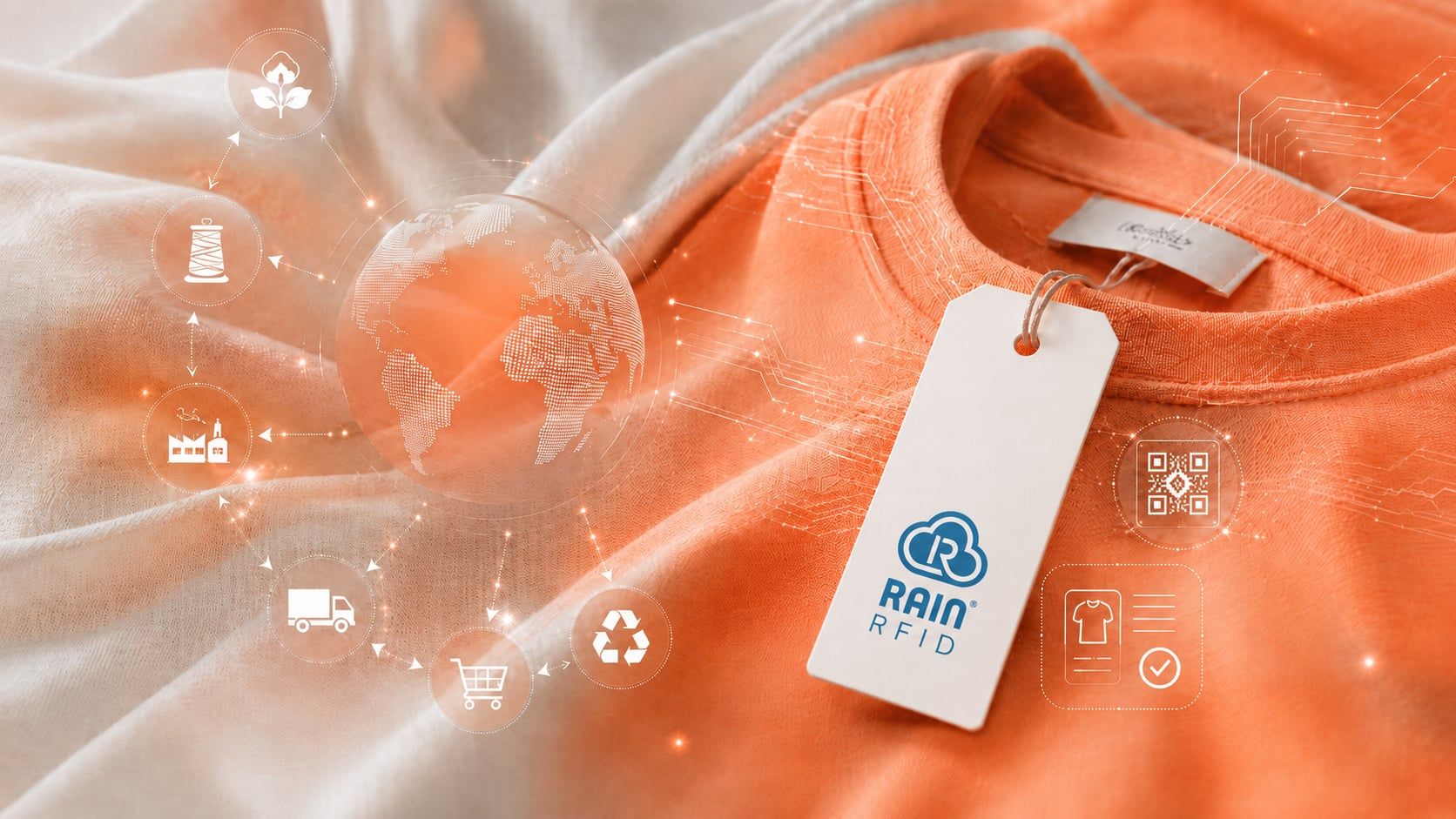
A guest contribution from Aileen Ryan, President & CEO of the RAIN Alliance. The choice of data carrier is one of the first real decisions in any Digital Product Passport project, and one GO TRACE approaches without a vendor agenda. Here, Aileen sets out the case for RAIN RFID and the retail infrastructure already behind it.
The fashion industry is responsible for 92 million tonnes of waste annually. And with “fast fashion” retailers continuing to flood the market with cheap, low-quality clothing, the United Nations estimates that by 2030 this waste metric will reach 134 million tonnes. The pressure to address this waste, and, more broadly, to increase operational sustainability throughout the textiles and garment industry, is therefore growing at speed.
National and international organisations are in the process of developing robust sustainability regulations to accelerate the transition to greener practices. California’s Responsible Textile Recovery Act of 2024 (SB 707) set in motion the United States’ first statewide requirement for textile producers to manage the recycling and reuse of their products. Meanwhile, the European Union’s incoming Ecodesign for Sustainable Products Regulation (ESPR) will require every garment and textile sold in the EU to carry a Digital Product Passport (DPP), containing machine-readable information on a product’s origin, its composition and its manufacturing process, readily available throughout the product’s entire lifecycle.
To access a product’s traceability data, consumers and businesses will need to engage with a data carrier that links physical products to their digital DPP information, creating irrefutable documentation of a product’s journey from source to end user. Choosing the right data carrier for any given product is, however, a fundamental decision. While baseline compliance could be achieved with several different data carriers, innovators will also look for solutions that unlock further benefits, improving both operational efficiency and customer engagement.
Choosing the right data carrier
To date, no single data carrier has been mandated as the preferred solution for the DPP. Options currently under consideration by global legislators include QR codes, Near Field Communication (NFC) and RAIN RFID, each of which has its own unique strengths depending on the specific DPP use case.
At least initially, a flexible, multi-carrier approach will optimise the DPP’s effectiveness, as different carriers each have their own strengths across the value chain. Simultaneous use of RAIN tags and other data carriers will help to ensure comprehensive product tracking and critical end-of-life instructions for sorters and recyclers, as well as providing consumers with easy access to comprehensive product information through more familiar technology, such as QR codes.
For textiles, ensuring DPP data remains accessible throughout the entire product lifecycle is a significant challenge. While some solutions may fade over time, RAIN tags can remain functional even after exposure to extreme weather conditions, intensive activity and hundreds of wash cycles. These tags also require no internal battery. They can harvest energy from the reader’s signal to power a brief exchange of data, meaning they can still provide functionality in use cases where an internal battery would be unfeasible, such as textiles.
RAIN RFID is already listed as one of the permitted data carriers in the draft CEN/CENELEC JTC 24 DPP standard, and is recognised as a strong solution across numerous use cases. What will help accelerate its adoption within the textiles and garments sector, however, is that a significant amount of the necessary infrastructure is already in place.
Integrating with existing retail infrastructure
A number of major retailers have trusted RAIN RFID for their inventory management for over a decade. Item-level RAIN tagging provides real-time visibility into stock positions, delivering an accurate stock take in a matter of seconds. But in recent years the technology has evolved from an innovative inventory tool into fundamental infrastructure.
Enhanced item-level visibility allows retailers to address choke points at any point in the supply chain before they cause shrinkage. Any misallocation of stock can be immediately identified and rectified thanks to real-time data, helping the garment industry reduce waste and achieve its sustainability goals by reducing the overall volume of resources consumed.
Furthermore, the same tags used for inventory management can also serve as a key security tool. The incumbent RAIN tag doubles as an electronic article surveillance (EAS) security tag, providing the same theft deterrent as a traditional hard tag but without the need to clip anything onto the product. And thanks to the DPP data, it also carries a readily accessible and infallible chain of custody, providing full transparency to vendors and customers that the item they are trading is authentic. In doing so, it protects the brand against the loss of revenue and reputation that can be incurred when poor-quality replicas flood the market. Meanwhile, the customer can be confident their purchase is legitimate, safe and of the highest quality.
Enriching the user experience
This method of authentication is also set to get easier, as work continues to integrate RAIN reading capabilities into everyday smartphones. This will make it possible for consumers and enterprises to interact with RAIN-tagged products without needing specialised equipment. Any authorised user will be able to securely interact with connected items, unlocking enhanced in-store customer experiences and enabling up-selling, cross-selling and product authentication. It also means that consumers would be able to scan for the DPP data of a product from their own smartphone, making garment traceability accessible to all.
Tying together traceability
Supply chains in the textile and garment industry are increasingly globalised. A single garment will have multiple raw-material suppliers, cut-and-sew factories and logistics providers across multiple continents, and each handoff creates another potential gap in traceability records. RAIN RFID offers a practical, affordable and accessible solution that facilitates transparent traceability and operational efficiency through item-level visibility.
Formalised DPP requirements for the European textile industry are expected by 2027, and California’s SB 707 is projected to be implemented by July 2028. To ensure continuity across long, complex supply chains, manufacturers, retailers and brands must start their preparations now. Using a trusted, standards-based technology like RAIN RFID means that each thread in the textile and garment supply chain can be stitched together into a harmonised, interoperable ecosystem.
Aileen Ryan is President & CEO of the RAIN Alliance. She has held leadership roles across software, hardware engineering, strategy and technology at organisations including Siemens, TM Forum, Huawei and Motorola, and holds an MBA, an MSc in Computer Science and a degree in Electrical Engineering.