
The DPP Paradox: Navigating a Project Between Homes
Editor’s note: this article grew out of exchanges between GO TRACE and Elisa Palandi around a practical gap observed in Brazil: many organisations still do not know where DPP sits internally, or how to begin the conversation concretely.
The Digital Product Passport (DPP) is rarely a technology problem; it is an organizational one. By design, it is a project between homes: sitting at the high-friction intersection of ESG, IT, Supply Chain, and Product. Because it belongs to everyone, it risks being owned by no one.
To move beyond abstraction, leadership must navigate three core tensions. These aren’t hurdles to clear; they are strategic choices that determine whether the DPP is a cost center or a competitive foundation.
The Reality Check
Coordination is what Digital Product Passports are about, not only about data.
You’re building a DPP system. Your company is still trying to decide if this sits in ESG, IT, supply chain… or nowhere.
You’re collecting material data. Your suppliers don’t even structure that information the same way.
You’re preparing for compliance. Your systems don’t talk to each other.
You’re investing in traceability. Half of your data still lives in spreadsheets.
The problem is not that companies don’t have data. It’s that everything is disconnected. Materials are here. Suppliers are there. Systems don’t integrate. Decisions happen in silos.
The Three Tensions
To move beyond this disconnect, leadership has to navigate three strategic choices. These determine whether the DPP is a cost center or a competitive foundation.
1. Speed vs. Traceability
There is often pressure to move fast, which usually means relying on batch-level data that is already available. However, true circularity, and the long-term potential of the DPP, requires deeper, item-level traceability to handle things like individual repairs, remanufacturing, and returns.
The Choice: Do we launch with a “Minimum Viable Passport” to establish a baseline, or do we invest the time now to map the supply chain to a level that supports future circular business models?
2. Standardization vs. Flexibility
IT and Compliance departments need rigid, standardized data fields to make reporting possible across thousands of units. Meanwhile, Product and Design teams often want the flexibility to highlight specific material innovations or unique sustainability stories that don’t fit into a standard box.
The Choice: Is the DPP simply a digital compliance form, or is it a brand canvas? The balance we strike here determines whether the data is useful only for regulators or if it actually brings value to the customer.
3. Meeting the Baseline vs. Strategic Readiness
There is a fundamental difference between putting a “digital sticker” on a product to satisfy immediate requirements and rebuilding how internal data systems communicate. Treating the DPP as a standalone task leads to technical debt; treating it as infrastructure creates readiness.
The Choice: Are we solving for the immediate regulatory milestone, or are we building the digital architecture that will keep the company competitive for the next decade?
From “Digital Sticker” to Data Dialogue
The “Digital Sticker” approach is the path of least resistance. It satisfies the immediate requirement but creates massive technical debt. True Strategic Readiness happens when the DPP is treated as the bridge that allows internal systems to finally “talk” to one another about the full lifecycle of a product.
The choice isn’t just about compliance; it’s about whether you are building a system to survive the regulation or a system to lead the market.
How to Start
Alignment isn’t a prerequisite for the DPP; alignment is the work.
If you wait for the technology to dictate the strategy, you’ll end up with a “digital sticker” that satisfies a regulator but does nothing for your business. The work starts by getting the people who own the data, the product, and the supply chain into the same room to decide, right now, where you are willing to compromise.
You don’t need a demo software. You need to identify where your data is currently “stuck” between departments and decide if you’re building for a 2027 deadline or for a circular business model that actually lasts.
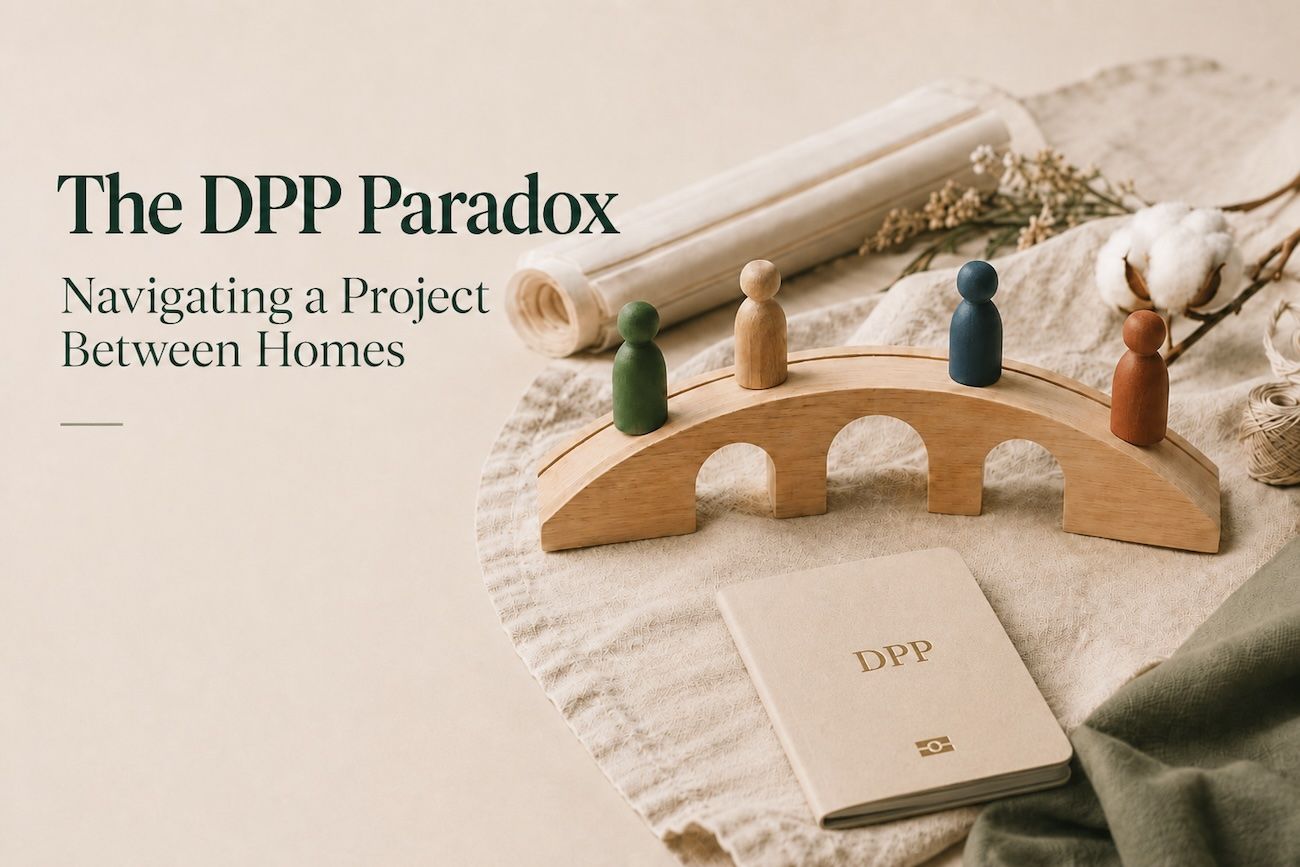
The DPP is the bridge. But you have to decide where it’s leading before you start building it.
The Real Shift
Before choosing platforms, tools, or partners… map where information actually lives inside your company. Understand who owns what. And, more importantly, where no one owns anything.
Because DPP starts with clarity. Digital Product Passports don’t work because you added more information. They work when what already exists finally connects.
That is the bridge between putting a “digital sticker” on a product and actually building a system that leads the market.
If you would like to go further, the GO TRACE Master Digital Product Passports for Fashion & Textiles course explores these issues in more depth. Explore the course →
Readers in Brazil are also welcome to connect with Elisa Palandi on LinkedIn.